
If you live in Nigeria, you already know the story: the power goes out, the generator comes on, and you’re left wondering whether your Air Conditioner can handle it.
For most Nigerian households and businesses, generators are not a backup plan; they’re a daily reality. That’s why choosing the best inverter AC for generator use in Nigeria matters more than most buyers realise.
Not every inverter AC is built to work smoothly with a generator, and picking the wrong one can mean overloaded generators, poor cooling, and costly repairs. This guide breaks it all down so you can make the right call.
Expert Contribution & Compilation
Technician: Tech. Oscar
Experience: Has worked on 1HP, 1.5HP, 2HP, and 5HP AC units across brands including LG, Hisense, Panasonic, Samsung, Skyrun, Daikin, Midea, and Thermocool.
Notable Installations & Maintenance: AB Inbev Onitsha Plant, Pabod Breweries Port Harcourt, Fouani Lagos, A.G. Leventis Lagos, and numerous homes, offices, and small businesses across multiple Nigerian states.
Expert Recommendation: From hands-on field experience, Tech. Oscar recommends LG or Hisense Inverter ACs for generator use in Nigeria, as both brands manage generator current effectively.
Contact: 08060518393 (For Inquiries)
Why Inverter ACs Are Better for Generator Use
The short answer is this: inverter ACs are easier on generators than conventional units. But to really understand why, let’s look at the three key reasons.
Lower Startup Power Demand
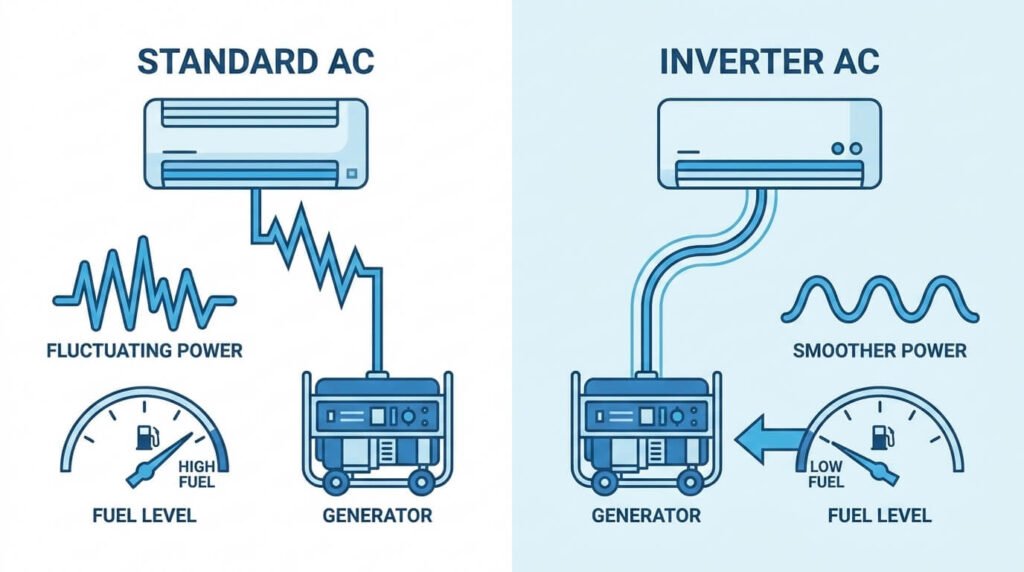
A standard AC compressor starts at full speed, pulling a massive startup surge that can trip or strain a generator instantly.
An inverter AC uses a variable-speed compressor that ramps up gradually. This soft start behaviour significantly lowers the startup current, which means your generator doesn’t get hit with a sudden, heavy load the moment the AC kicks in.
For anyone running a moderately sized generator, this difference alone makes inverter technology the smarter choice.
Better Energy Efficiency
Inverter ACs continuously adjust their power consumption based on how much cooling is actually needed. Once the room reaches the set temperature, the compressor slows down instead of switching off and restarting repeatedly.
This translates to lower running wattage compared to non-inverter units, which in turn means your generator burns less fuel per hour. Over time, the fuel savings are real and measurable.
Reduced Generator Stress
Because the power demand from an inverter AC is smoother and more stable, the generator doesn’t experience constant spikes and dips in load.
This protects the generator’s engine and AVR system over time, reducing wear and extending its lifespan.
Think of it like driving in traffic: smooth acceleration and braking preserve your engine far better than harsh stops and starts.
What Makes an Inverter AC Generator-Friendly?
Not every inverter AC works equally well with a generator. These four characteristics separate generator-friendly models from those that struggle.
Low Startup Surge
The lower the startup surge, the better suited the AC is for smaller generators. Some inverter ACs, particularly those with soft start technology built into their compressor, can start on generators as small as 2kVA.
If you’re pairing an AC with a modest petrol generator, this is one of the most critical specs to check before buying.
Stable Power Consumption
A generator’s output isn’t always as steady as mains power. An inverter AC that draws consistent, predictable power is far more compatible with generator output than one with erratic consumption patterns.
Stable running wattage reduces the risk of tripping the generator’s overload protection.
Voltage Tolerance
Nigerian generators, especially petrol generators used at home, don’t always deliver a perfectly stable voltage.
An AC with a wide voltage tolerance range can handle these slight variations without shutting down or triggering a fault.
Look for units that specify a wide input voltage range; some models tolerate as low as 150V without issues.
Efficient Compressor Design
Brands like LG with their Dual Inverter Compressor and Daikin Industries with their advanced compressor engineering draw less energy over time.
A well-designed compressor optimises power use throughout the cooling cycle, reducing the continuous load on the generator and improving overall fuel economy.
Key Features to Look for in an Inverter AC for Generator Use
Energy Efficiency Rating
Always check the Energy Efficiency Ratio (EER) or Seasonal Energy Efficiency Ratio (SEER) rating.
A higher rating means the unit produces more cooling per watt of electricity consumed. For generator use, this directly affects how much petrol or diesel your generator burns during operation.
A high-efficiency unit doesn’t just save money on fuel; it reduces the load capacity demand on the generator.
Horsepower (HP) Selection
Matching the right horsepower to your room size is non-negotiable. A 1HP unit is fine for a bedroom, while a 1.5HP unit suits medium-sized living rooms.
Getting this wrong, for instance, using a 2HP AC on a generator sized for 1HP, creates overload conditions that can damage both the AC and the generator. Room size and BTU requirements should always guide your HP choice.
Voltage Protection Features
Look for built-in voltage protection features like High Voltage Protection (HVS) and Low Voltage Start (LVS) — LG Electronics, for instance, includes both in several of their inverter models.
These safeguards protect the PCB board and internal electronics when the generator voltage fluctuates, which is a common occurrence in real-world Nigerian conditions.
Fast Cooling Performance
Features like Turbo Cooling (available in Hisense models) allow the AC to reach the desired temperature quickly, after which it drops to a lower, energy-efficient speed.
This means the generator works hard for a short burst and then settles into a lighter, sustainable load, a much healthier operating pattern.
Best Inverter AC Categories for Generator Use in Nigeria
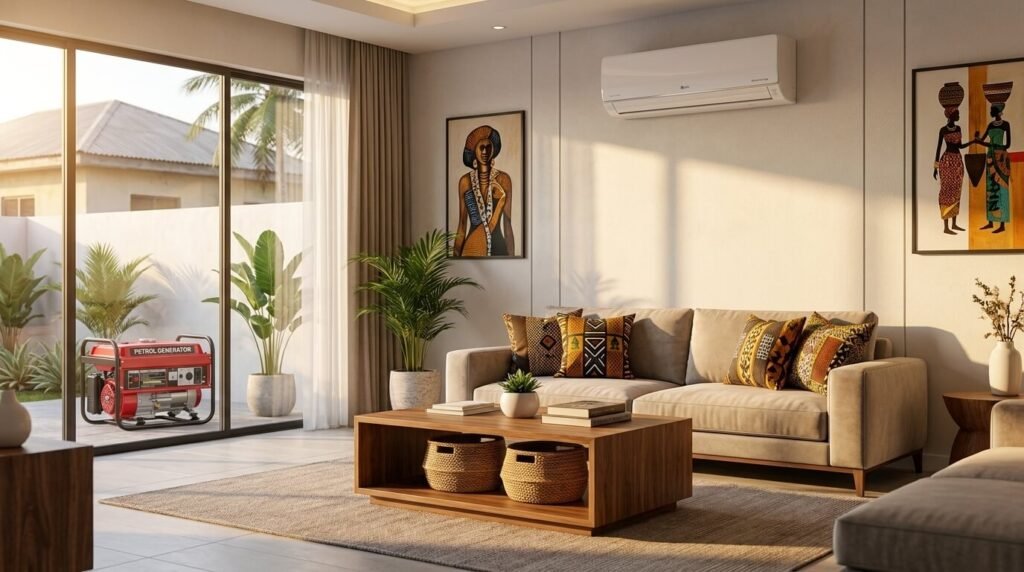
Based on Tech. Oscar’s field experience across installations in homes, offices, and industrial facilities, here are the most practical categories to consider:
Best 1HP Inverter AC for Small Rooms
A 1HP inverter AC is ideal for bedrooms and small office spaces, typically rooms between 10 and 15 square metres.
At this capacity, running wattage usually sits between 600W and 750W, making it manageable on a 2–2.5kVA generator with a proper safety margin.
LG and Hisense both offer solid 1HP inverter options that are known to manage generator current effectively, as pointed out by Tech. Oscar emphasises this from direct installation experience.
Best 1.5HP Inverter AC for Medium Rooms
The 1.5HP inverter AC is the most popular choice for Nigerian living rooms and medium-sized spaces.
Running wattage typically ranges from 1,000W to 1,300W. This is also where generator compatibility becomes more complex; the startup surge matters a lot here.
Hisense’s 1.5HP inverter models with turbo cooling and LG’s 1.5HP dual inverter units are frequently installed across homes and offices for their reliable generator performance.
If you want to understand generator pairing better, read our guide on the required generator size for 1.5HP AC.
Best 2HP Inverter AC for Large Spaces
For large living rooms, open offices, or commercial spaces, a 2HP inverter AC provides the necessary cooling capacity.
Running wattage typically falls between 1,600W and 2,000W, requiring a generator with at least 3.5–7kVA capacity (plus other electrical appliances) to operate safely.
Samsung Electronics and LG offer capable 2HP inverter units in the Nigerian market. Tech. Oscar has installed 2HP units in facilities like AB Inbev Onitsha Plant and Pabod Breweries, where managing electrical load efficiently is critical.
Generator Size Recommendations for Inverter ACs
Generator Size for 1HP Inverter AC
A 1HP inverter AC has a running wattage of around 600–750W. With a safety margin factored in, a 2kVA generator is the minimum safe running capacity.
A 2.5kVA generator gives you more headroom, especially if other small appliances like lights or fans are running simultaneously. Always account for the starting wattage, which can briefly spike to 1.5x or more of the running load.
Generator Size for 2HP Inverter AC
A 2HP inverter AC requires a generator with at least 3.5kVA continuous output.
Given the startup surge, a 4–5kVA generator is the more practical recommendation. If you plan to run additional appliances alongside the AC, go for a 5kVA or larger generator to avoid tripping the overload protection or starving the compressor of adequate power.
Inverter AC vs Non-Inverter AC on Generator Power
Startup Load Comparison
Non-inverter ACs use a fixed-speed compressor that draws maximum startup current every time it cycles on, which happens frequently.
This creates repeated, heavy peak load events that are hard on any generator.
An inverter AC’s variable-speed compressor reduces that startup surge significantly, making it far gentler on generator capacity and far less likely to trigger an overload trip.
Fuel Consumption Comparison
Running a non-inverter AC on a generator typically burns noticeably more fuel per hour.
Since non-inverter units run at full power every cycle, the generator works harder and consumes more petrol or diesel.
An inverter AC, once the room is cool, throttles back its compressor, reducing continuous load and improving the generator’s fuel economy meaningfully, sometimes by 30–50% depending on conditions.
Long-Term Cost Comparison
The upfront cost of an inverter AC is higher, but when you factor in lower fuel consumption, reduced maintenance costs on the generator, and longer equipment lifespan for both units, the return on investment becomes clear.
For Nigerians who run generators for 6–12 hours a day, the savings in petrol costs alone can recover the price difference within one to two cooling seasons.
Common Problems When Running AC on Generators
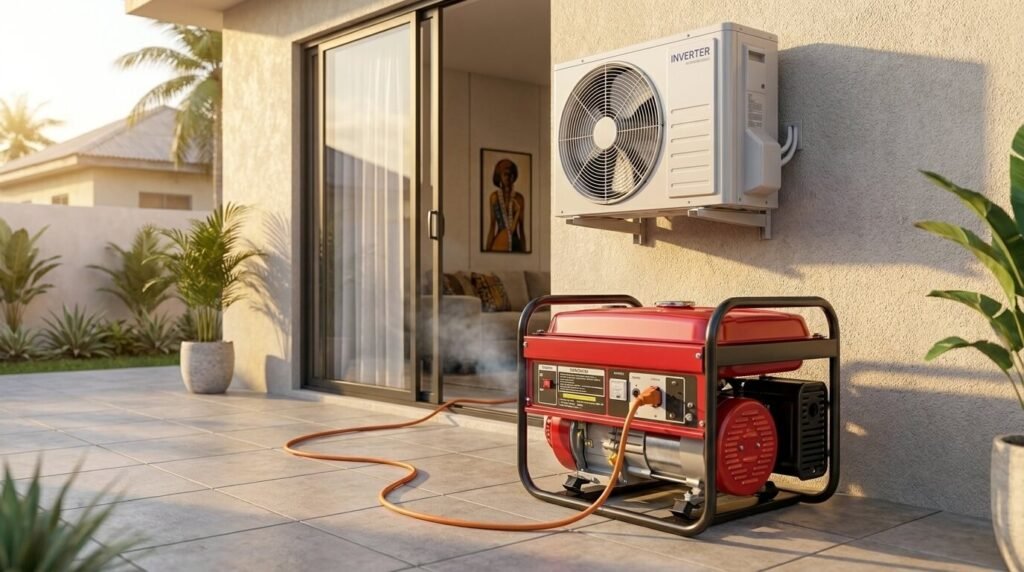
Generator Overload
The most common problem is choosing a generator that’s too small for the AC’s demand.
When the generator is overloaded, it either trips its circuit breaker or runs under severe strain, damaging the engine over time.
Always check the starting wattage of your inverter AC, not just the running wattage, and size the generator accordingly with a sufficient safety margin.
Voltage Fluctuation Damage
Petrol generators, especially older or low-quality ones, often produce voltage fluctuations that can stress or permanently damage the PCB board inside an inverter AC.
These internal electronics are sensitive. Without adequate voltage stability, the AC may shut down unexpectedly, run inefficiently, or suffer component failure.
This is one of the strongest arguments for pairing your AC with a voltage stabiliser or using an inverter generator with a pure sine wave output.
Poor Cooling Performance
When a generator is overloaded or producing unstable output, the AC compressor doesn’t receive the power it needs to operate optimally.
The result is poor cooling performance: the room stays warm, the AC runs continuously, and the generator burns through fuel without delivering the comfort you need.
Correct generator sizing and voltage stability both directly affect how well the AC cools.
Tips for Running an Inverter AC on a Generator in Nigeria
Use a Voltage Stabiliser
Even with a decent petrol generator, voltage fluctuation is a real risk.
A good voltage stabiliser — such as models from Binatone or similar brands available in the Nigerian market acts as a buffer between the generator and your AC, smoothing out irregular power and protecting the AC’s PCB protection circuitry.
This is especially important if you’re not using an inverter generator with a built-in AVR.
Avoid Overloading the Generator
Running your AC alongside heavy appliances like refrigerators, water pumps, or electric irons on the same generator significantly increases the total load.
Calculate the combined running wattage of every connected appliance and ensure it stays well within the generator’s load capacity, ideally no more than 75–80% of the rated output, to prevent overload and extend generator life.
Service Both AC and Generator Regularly
Routine maintenance is not optional; it’s what keeps both units running efficiently. For the AC, this means regular filter cleaning, refrigerant checks, and condenser coil inspection.
For the generator, it means oil changes, air filter replacement, and spark plug checks.
Tech. Oscar notes that many of the performance issues he encounters in the field trace back to poor maintenance rather than incompatibility between the units.
Choose the Right Fuel Capacity
If you plan extended cooling periods overnight or through long daytime outages, choose a generator with a fuel tank large enough to last without mid-session refills.
Interrupted generator operation forces the AC to restart from scratch, creating repeated startup surges.
A larger fuel capacity supports smoother, uninterrupted generator runtime and protects the AC compressor from repeated cold starts.
How to Choose the Best Inverter AC for Your Home
Based on Room Size
Start here. A room of 10–15sqm needs a 1HP unit; 15–25sqm works well with 1.5HP; anything above 25sqm warrants a 2HP unit.
Matching horsepower to room size ensures efficient cooling without unnecessarily taxing your generator’s load capacity.
Oversizing the AC for a small room wastes energy and strains the generator; undersizing means the unit works too hard and never achieves comfort.
Based on Generator Capacity
Once you know the AC’s running wattage, match it to a generator that can handle both the running load and the startup surge with capacity to spare.
A good rule of thumb: the generator should be rated for at least 1.5 to 2 times the AC’s running wattage to accommodate the startup surge and leave a buffer for generator oversizing protection.
Based on the Daily Usage Pattern
If you’re running the AC for 8 or more hours a day, invest in a high-efficiency inverter model even if it costs more upfront.
The fuel savings over frequent, long daily usage cycles will make the investment worthwhile.
For occasional weekend cooling or guest rooms, a mid-range inverter AC with solid generator compatibility is sufficient without needing the top-tier efficiency premium.
Based on Budget
Budget matters, but the cheapest option often costs more in fuel and repairs over time.
LG and Hisense offer some of the best value inverter ACs in Nigeria for generator use, with competitive pricing and features like low voltage start, high voltage protection, and efficient compressors that perform well in the Nigerian power environment.
Factor in long-term fuel costs and maintenance costs when comparing options, not just the sticker price.
Common Buying Mistakes to Avoid
Buying High HP for Small Generators
This is one of the most frequent mistakes Tech. Oscar encounters. A buyer purchases a 2HP AC because they want powerful cooling, but pairs it with a 2.5kVA generator.
The result is immediate generator overload, poor cooling, and often damage to both units. Match your AC’s HP to your generator’s load capacity first, and then match both to your room size.
Ignoring Voltage Compatibility
Some buyers focus only on HP and price and completely ignore whether the AC can handle the voltage range their generator produces.
Generators, particularly petrol units without a good AVR, can deliver irregular voltage that’s damaging to inverter electronics.
Always check the voltage compatibility specifications of the AC, and if in doubt, add a voltage stabiliser to your setup.
Choosing Based Only on Price
A cheap AC that runs inefficiently on a generator will cost you far more in fuel consumption over a single dry season than the price difference between it and a quality inverter unit.
Look at energy efficiency ratings, compressor quality, and brand reliability alongside price.
Brands like LG Electronics and Hisense have earned strong reputations in the Nigerian market specifically because their inverter ACs hold up under real-world generator-powered conditions.
Conclusion
Choosing the best inverter AC for generator use in Nigeria comes down to three things: low startup load, strong energy efficiency, and stable operation under generator power.
Get these right, and your AC and generator will work together reliably, saving you money on fuel and sparing both machines from unnecessary wear.
The right combination improves cooling performance, reduces fuel consumption, and extends the lifespan of your equipment.
Before you buy, assess your room size, check your generator’s capacity, and consider the voltage stability of your power source. That extra step before purchase will save you a lot of frustration down the line.
[…] buyers researching the best inverter AC for generator use in Nigeria, this is the single most important spec to check before purchase, since generator power is rarely […]