
Your AC was working perfectly until it wasn’t. You’ve called the technician once, maybe twice, and each visit feels more expensive than the last, with no clear explanation of why the problems keep returning.
You’re maintaining it, and yet it still lets you down at the worst possible time.
Waiting until something breaks isn’t a maintenance plan; it’s an expensive habit that shortens your unit’s life faster than the Nigerian heat ever could.
This post breaks down exactly how often you should service your AC in Nigeria, and why local conditions like humidity, dust, and constant usage demand a stricter schedule than the manufacturer’s manual suggests.
Here’s what most Nigerians don’t know: your AC isn’t breaking down from overuse; it’s breaking down from under-maintenance.
Why Regular AC Servicing Matters
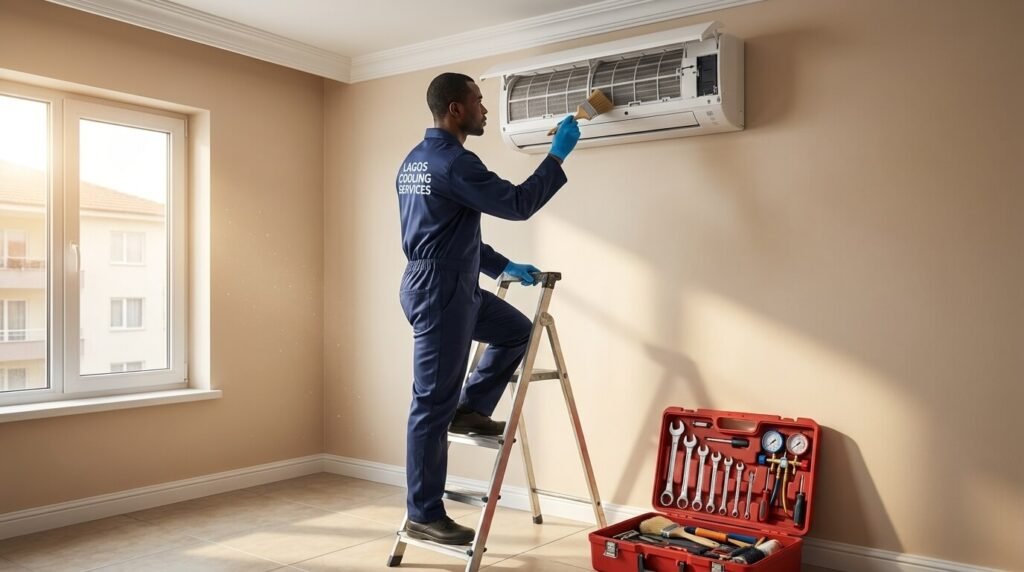
Maintaining Cooling Efficiency
A clean AC cools faster and more effectively.
When dust and dirt build up on the filters and evaporator coil, the system struggles to absorb and transfer heat properly. The result?
Your room takes longer to cool down, and the AC runs longer than it should. Routine filter cleaning and coil cleaning restore airflow and keep the cooling efficiency where it should be.
Reducing Electricity Consumption
A dirty AC unit consumes more power, full stop. When airflow is restricted by a clogged air filter or dirty coils, the compressor works harder to compensate, and that extra effort shows up directly on your electricity bill.
In Nigeria, where power costs are already a concern, a well-serviced AC can make a noticeable difference in monthly utility bills.
Preventing Major Breakdowns
Most major AC breakdowns don’t happen out of nowhere. They build up over time from ignored warning signs, a slightly blocked drain pipe here, a refrigerant pressure drop there.
Preventive maintenance catches these small issues before they become expensive compressor failures or full system replacements. The cost of a routine service visit is always far less than an emergency repair.
Improving Indoor Air Quality
Your AC filter isn’t just about cooling; it’s your first line of defense against airborne dust, allergens, mold spores, and other particles.
Medical professionals and public health agencies recognize that poor indoor air quality acts as a significant risk factor, particularly for those with pre-existing conditions.
The American Lung Association emphasizes that individuals already suffering from lung diseases, such as asthma or chronic obstructive pulmonary disease (COPD), face a higher risk of health complications when exposed to indoor pollutants.
A clean filter means cleaner air circulating through your space, which matters whether you’re in Lagos, Abuja, or Kano.
Factors That Determine How Often You Should Service Your AC
Frequency of Usage
This is the biggest factor. An AC running 4–8 hours a day in a home has a very different wear pattern than one running nearly 24 hours in a commercial space.
More runtime hours mean faster dust accumulation, more strain on the compressor, and quicker filter clogging, all of which push the service interval closer.
Location and Climate
Nigeria’s climate isn’t uniform. Coastal cities like Lagos and Port Harcourt deal with high humidity, which increases moisture load on the system and raises the risk of mold growth inside the unit.
Northern cities like Kano or Kaduna face dry heat and heavy harmattan dust, which clogs filters faster and strains the outdoor unit.
If you’re shopping for a new unit and wondering about the best AC brands for high humidity in Port Harcourt and Lagos, or the top AC brands that can work under dry heat and in Northern Nigeria, those regional differences matter just as much for servicing frequency as they do for brand selection.
Indoor Environment
A home with ceramic-tiled floors and minimal foot traffic generates far less dust than a busy office or a house near a construction site.
The dustier the indoor environment, the faster the air filter gets clogged, and the shorter the gap between service visits should be.
Type of Air Conditioner
Inverter ACs and non-inverter ACs have similar basic maintenance needs, filter cleaning, coil cleaning, and drainage checks, but inverter units have sensitive PCB boards and electronic components that require more careful handling.
A Daikin Industries inverter AC, for instance, needs a technician who understands how its variable-speed system works. A Hisense non-inverter AC is more straightforward but may cycle on and off more frequently, creating different wear patterns.
Recommended AC Servicing Schedule in Nigeria
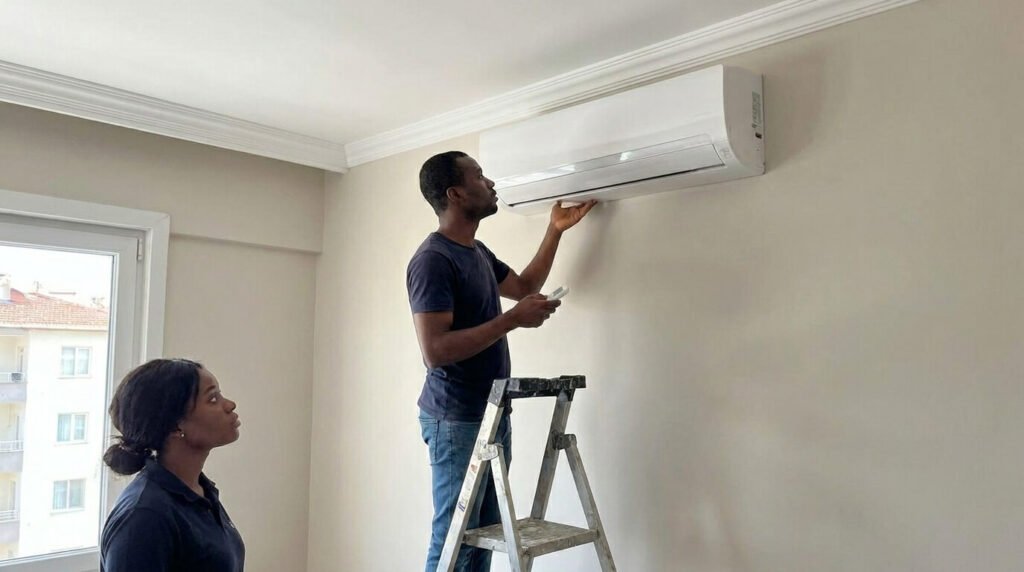
Here’s where the practical answer lives. After five years of working as an AC maintenance technician across different environments in Nigeria, the honest answer is this: there’s no single schedule that fits everyone. It depends on your environment and how the AC is being used.
Here’s how to break it down:
For Residential Homes
If your AC runs about 4–8 hours daily in a relatively clean environment, normal dust levels, decent ventilation, and no unusual pollutants, then servicing once every three months is the right interval.
That’s four times a year. This covers filter cleaning, coil inspection, drainage cleaning, and a refrigerant pressure check.
If the environment is cleaner than average and usage is lighter, you might stretch to once every four months, but three months is the safe standard for Nigerian conditions.
For example, check our guide on Split AC Maintenance for your home.
For Offices
Office ACs typically run 8–10 hours daily, Monday through Friday, and sometimes on weekends. The higher daily operational demand means more wear on the system and faster dust accumulation, especially in open-plan offices with high foot traffic.
For office environments, servicing once every two months keeps performance consistent and prevents the kind of breakdowns that disrupt work.
For Commercial Spaces
Shops, restaurants, hotels, and industrial spaces often run their ACs continuously, sometimes 18 to 24 hours a day. This is heavy usage by any standard.
For these environments, monthly servicing is the right approach. The compressor strain and dust accumulation happen so quickly that waiting two or three months between visits guarantees a breakdown.
Commercial AC usage demands a strict maintenance schedule, not a flexible one.
For Generator-Powered ACs
This one gets overlooked a lot. In Nigeria, most ACs run partly or mostly on generator power, which introduces voltage fluctuation as a constant risk factor.
Unstable electricity from generators affects the PCB board, the capacitor, and other electrical components in ways that stable grid power doesn’t.
A voltage stabilizer helps, but it doesn’t eliminate all the stress. ACs running primarily on generator power should be serviced on the shorter end of whatever schedule applies to their usage type, and electrical component inspection should be a fixed part of every visit.
How Nigeria’s Climate Affects AC Servicing Frequency
Harmattan Dust Season
The Harmattan season, typically between November and March, is the harshest period for AC units across Nigeria.
The fine, dry dust that comes with the Harmattan clogs filters faster than normal dust, coats the evaporator and condenser coils, and reduces airflow significantly.
Understanding the effects of Harmattan dust on AC systems is important: if you don’t increase your servicing frequency during this period, you risk restricted airflow, reduced cooling capacity, and a compressor working overtime.
A pre-Harmattan service in October or early November is one of the smartest things an AC owner can do.
Also worth noting if your unit suddenly struggles during this period, knowing how to deal with an AC not working during Harmattan can save you time and money before you call a technician. Often, it’s a clogged filter that a simple cleaning can fix.
High Humidity in Coastal Areas
In cities like Lagos and Port Harcourt, humidity levels can stay consistently high throughout much of the year.
This creates a perfect environment for mold growth and mildew formation inside the AC unit, particularly in the evaporator coil housing and drain pan.
Salt air corrosion is also a real concern for outdoor units in coastal areas, which can damage the condenser coil over time.
More frequent servicing and thorough coil cleaning help keep these risks in check.
Dry Heat in Northern Nigeria
The dry heat in northern cities like Kano doesn’t come with the moisture problems of the south, but it comes with its own challenges.
The AC has to work harder to cool against extreme outdoor temperatures, putting extra pressure on the compressor.
Combined with the dust common in northern environments, the outdoor unit can get clogged and overheated quickly. Regular outdoor unit cleaning becomes especially important here.
What Happens During AC Servicing?
Filter Cleaning
The air filter is the most frequently serviced component, and rightly so.
A technician removes the filter, cleans off the accumulated dust, often using compressed air or water, and reinstalls it.
This single step restores airflow and immediately improves cooling efficiency.
Coil Cleaning
Both the evaporator coil (indoor) and condenser coil (outdoor) need to be cleaned during servicing.
LG Electronics evaporator coils, Samsung Electronics condenser coils, or whichever brand you own, they all accumulate grime over time that reduces heat exchange efficiency.
Coil cleaning is one of the more technical parts of servicing and is where an experienced technician earns their keep.
Refrigerant Inspection
The technician checks the refrigerant pressure to make sure the cooling gas levels are where they should be.
Low pressure usually indicates a gas leak. If the R-410A refrigerant, or whatever type your system uses, is low, a top-up is needed, but fixing the leak comes first; the gas loss will continue.
Drainage Cleaning
The drain pipe carries condensate water out of the indoor unit. Over time, it gets blocked by mold, algae, and debris.
A blocked drain causes water to back up and leak from the indoor unit, which damages walls and ceilings.
Drain pipe cleaning prevents this and should be part of every routine service visit.
Electrical Component Inspection
A thorough service includes checking the capacitor, inspecting the electrical wiring, and checking the circuit breaker.
Given how much voltage fluctuation Nigerian ACs deal with, whether from the grid or a generator, this inspection step is non-negotiable.
Catching a failing capacitor early prevents compressor failure, which is one of the most expensive repairs on any AC system.
Signs Your AC Needs Immediate Servicing
Weak Cooling Performance
If your AC is running but not cooling the room the way it used to, that’s a clear signal. It could be a clogged filter, low refrigerant, dirty coils, or a compressor struggling under strain.
Don’t wait for the next scheduled visit; get it checked immediately.
Unusual Noise
Strange sounds — rattling, grinding, squealing usually point to mechanical issues inside the unit. A fan blade out of alignment, a worn fan motor, or debris stuck in the blower wheel can all cause unusual noise. Left unchecked, these issues tend to escalate quickly.
Water Leakage
Water dripping from the indoor unit is a sign of a blocked drain pipe or, in some cases, ice forming on the evaporator coil from low refrigerant.
Either way, it needs attention. Beyond the AC itself, water leakage damages walls, furniture, and ceilings.
Bad Odor
A musty or foul smell coming from your AC usually means mold or mildew has built up inside the unit in the filter, on the coils, or in the drain pan.
This isn’t just a comfort issue; it directly affects indoor air quality and can trigger respiratory problems.
Increased Electricity Bills
If your power or electricity consumption has gone up noticeably but your usage habits haven’t changed, your AC is probably working harder than it should be.
A dirty, inefficient system draws more power to deliver the same (or less) cooling output. This is one of the earliest financial signs that a service is overdue.
How Often Should You Clean AC Filters?
Homes With Regular Usage
For a home AC running 4–8 hours daily in a moderately clean environment, cleaning the filter every 4 to 6 weeks is a reasonable interval.
This can be done by the homeowner or as part of a technician visit. A Panasonic Holdings air filter, for instance, is straightforward to remove and rinse; most residential filters are.
Dusty Environments
If the home is near a busy road, construction site, or in an area with generally poor air quality, filter cleaning should happen every 2 to 3 weeks.
Dust accumulation in these environments is fast, and a blocked filter is the quickest path to reduced cooling and increased power consumption.
During the Harmattan Season
During Harmattan, even homes in relatively clean areas can see rapid filter clogging. Checking the filter every two weeks and cleaning as needed is the safest approach.
Some technicians recommend a mid-season coil inspection too, especially for units running long hours in the north or in homes without dust-sealing on windows and doors.
Inverter AC vs Non-Inverter AC Maintenance
Servicing Similarities
Both inverter and non-inverter ACs require the same basic servicing: filter cleaning, coil cleaning, drainage cleaning, refrigerant inspection, and electrical checks.
The frequency is determined by environment and usage, not by AC type. A dusty environment demands more frequent servicing regardless of whether the unit is an inverter or not.
Inverter System Sensitivity
Where inverter ACs differ is in their electronic complexity. The PCB board in an inverter system controls the variable-speed compressor and is significantly more sensitive to voltage fluctuations than a standard unit.
If you’re running a Daikin Industries inverter AC on a generator without a good voltage stabilizer, you’re taking a real risk with the control board. PCB inspection during servicing is especially important for inverter units.
Long-Term Efficiency Maintenance
Inverter ACs are built to save electricity over the long term, but this efficiency benefit erodes quickly if the system isn’t maintained.
A dirty evaporator coil or low refrigerant forces even the most advanced inverter compressor to work at higher speeds, wiping out the energy savings that made the inverter AC worth the higher purchase price.
Common AC Maintenance Mistakes Nigerians Make
Waiting Until the AC Stops Cooling
This is the most common and most costly mistake. By the time an AC stops cooling entirely, whatever was causing the problem has usually gotten bad enough to require a major repair.
The compressor may already be damaged. Preventive maintenance servicing before problems escalate is always cheaper than reactive repair.
Ignoring Filter Cleaning
Many people don’t touch the air filter between technician visits, and some aren’t even aware it needs regular attention.
A clogged filter restricts airflow, reduces cooling efficiency, and forces the entire system to work harder.
It’s also one of the simplest maintenance tasks: rinse the filter under running water, let it dry, and reinstall. There’s no reason to skip it.
Using Unqualified Technicians
The market for AC technicians in Nigeria is a mixed bag. Unqualified technicians often charge less, but they can cause serious damage with incorrect refrigerant top-up, mishandled PCB boards, improper drainage cleaning, or missed electrical faults.
Always use someone with verifiable HVAC experience, especially for inverter systems.
Skipping Seasonal Maintenance
The shift into the Harmattan season and the rainy season are both inflection points for AC performance.
Skipping a service visit before either season means going into a high-demand period with a system that isn’t properly prepared.
A pre-Harmattan service in October and a pre-rainy season check in March or April should be built into every AC owner’s calendar.
Tips to Extend AC Lifespan in Nigeria
Schedule Preventive Maintenance
Don’t wait for problems; schedule your service visits in advance and stick to them.
A proper maintenance schedule, built around your usage pattern and environment, is the single most effective thing you can do to extend your AC’s system lifespan.
A well-maintained unit can serve you reliably for 10–15 years; a neglected one may not make it to five.
Keep Indoor Space Clean
The cleaner your indoor environment, the slower your AC’s filter and coils get dirty. Regular sweeping, using door mats, and minimizing open-window dust entry all reduce the dust intake your AC has to deal with.
This doesn’t eliminate the need for servicing, but it can extend the interval between filter cleanings.
Use Voltage Protection
A voltage stabilizer is not a luxury in Nigeria; it’s a necessity. The Nigerian Electricity Regulatory Commission has documented how voltage fluctuations from the national grid affect appliances.
For ACs running partly on generator power, the risk is even higher. Protect your investment with a properly rated stabilizer, especially for inverter units, where the PCB board is the most vulnerable component.
Avoid Overworking the AC
Setting the temperature to 16°C and leaving it there all day isn’t efficient; it’s hard on the system. A setting between 22°C and 24°C is comfortable for most people and puts far less strain on the compressor.
Also, make sure the AC is sized correctly for the room; an undersized unit will run continuously trying to cool a space that’s too large, which shortens its lifespan significantly.
When to Replace Instead of Repair
Frequent Breakdowns
If your AC is breaking down more than twice a year and the repair bills are stacking up, it’s worth doing the math. At some point, the cumulative cost of maintenance becomes more expensive than investing in a new unit.
A good rule of thumb: if a repair costs more than 40–50% of the price of a new equivalent unit, replacement is the smarter financial decision.
Reduced Cooling Despite Servicing
An aging AC that still struggles to cool properly after a full service clean filters, cleaned coils, and correct refrigerant levels is showing signs of end-of-life.
The compressor may have lost capacity, or other internal components may have degraded to the point where servicing can no longer recover the system’s original performance.
High Electricity Consumption
Older non-inverter ACs, particularly those over 8–10 years old, often consume significantly more power than newer models.
If your electricity bills are climbing despite regular servicing and your unit is aging, switching to a modern inverter AC will likely pay for itself in energy savings over two to three years.
Conclusion
How often you should service your AC in Nigeria ultimately comes down to four things: how you use it, where you live, what the climate is doing, and how disciplined you are about maintenance.
A residential AC in a clean environment needs servicing every three months; a commercial or factory unit running nearly 24 hours needs it every month or two.
Regular AC servicing keeps your cooling performance strong, your electricity consumption in check, and your system running for years longer than a neglected one would.
Don’t wait for a breakdown to remind you. Build a servicing schedule, stick to it, and your AC will return the favor.
[…] For specific regions like Nigeria, the best time to service your AC is before the rainy season and before the start of the Harmattan season. To learn more, see this guide: How often should you service your AC in Nigeria? […]