
If you live in Nigeria, you already know the drill: NEPA takes light, and the generator comes on.
But here’s where things get interesting: more Nigerians are switching to inverter air conditioners for their energy efficiency, and one question keeps coming up. Are inverter AC and generator compatible in Nigeria?
The short answer is yes, but not always without conditions. Generator power isn’t always clean or stable, and inverter ACs are more sensitive to power quality than regular ACs.
This guide breaks down everything you need to know from generator sizing to voltage stability so that you can run your inverter AC safely and confidently.
What Is an Inverter Air Conditioner?
How Inverter AC Technology Works
A regular AC compressor works in a simple on/off cycle; it runs at full speed, shuts off, then restarts.
An inverter AC works differently. It uses a variable speed compressor like those manufactured by Copeland and used in Daikin Industries units, which adjusts its speed based on how much cooling is needed at any given moment.
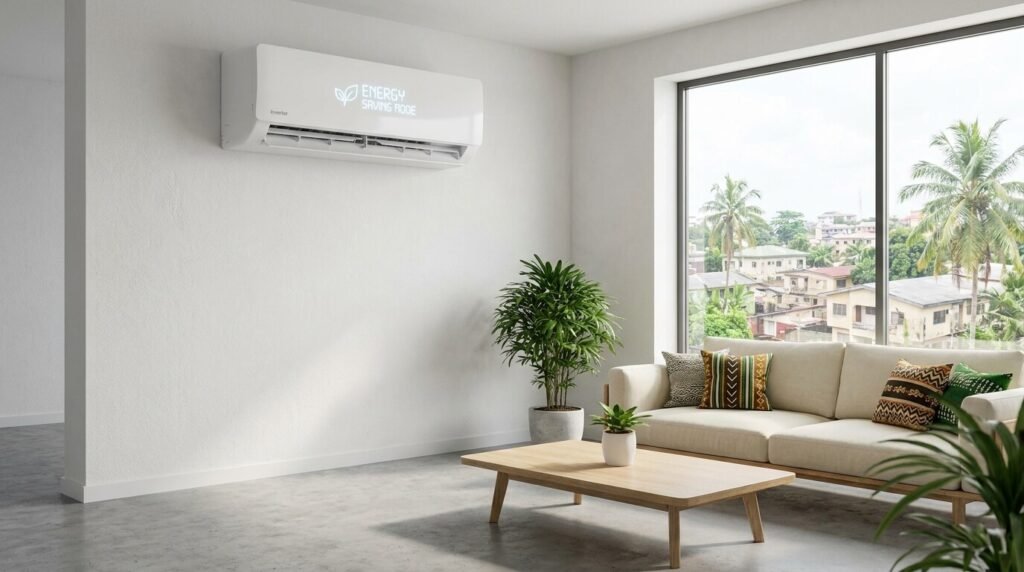
Instead of stopping and restarting constantly, it slows down or speeds up. This steady operation uses less electricity and puts far less strain on your generator.
Why Inverter ACs Are Different From Regular ACs
The biggest difference is in how they manage power. A standard AC pulls a large, fixed amount of electricity regardless of room temperature.
An inverter AC, on the other hand, has a Smart AC PCB — an electronic control board — that continuously reads the room temperature and adjusts the compressor speed accordingly.
This smarter power management delivers more stable cooling, lower electricity bills, and, importantly, a lower continuous load on your generator during operation.
Why Inverter ACs Are Popular in Nigeria
Nigeria’s hot and humid climate means air conditioners run for long hours, sometimes all day. That makes energy efficiency a top priority.
Inverter ACs from brands like LG Electronics, Hisense, and Samsung Electronics have gained popularity because they consume significantly less power over time than fixed-speed units.
Lower electricity bills and better fuel economy on generator use make them attractive, especially for anyone trying to manage their energy budget in a country with an unreliable power supply.
How Generators Supply Power
Generator Power Output Basics
Every generator is rated by how much power it can produce, measured in watts or kilovolt-amperes (kVA).
When sizing a generator for an AC, you need to understand two things: running watts (the continuous power the AC needs during operation) and starting watts (the higher surge it demands at startup).
These are two very different numbers, and ignoring the difference between them is one of the most common mistakes people make when pairing a generator with an air conditioner.
Types of Generators Used in Nigeria
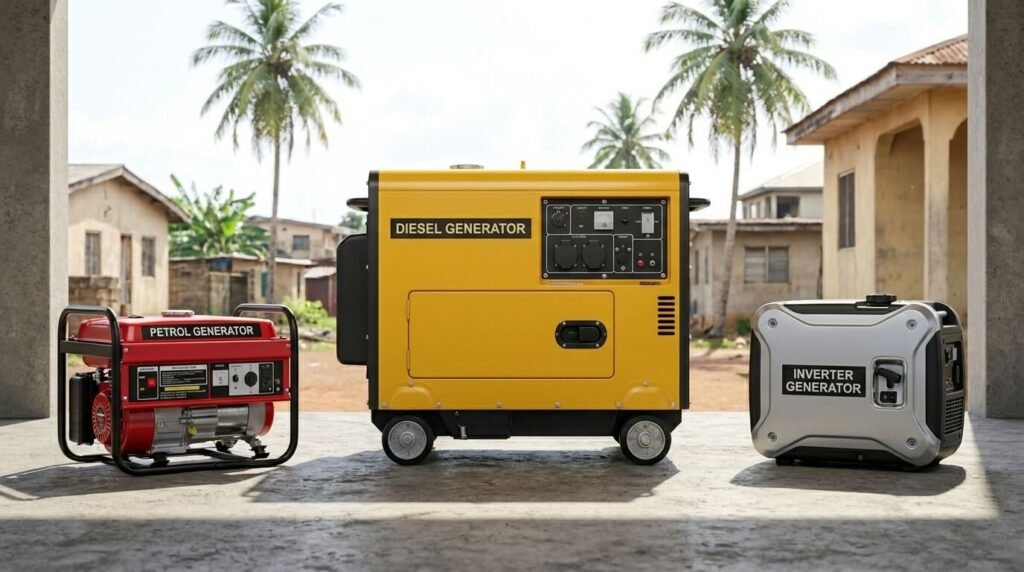
Three main types are commonly used across Nigerian homes and offices:
Petrol generators — the most common, from brands like Firman Power Equipment. Affordable and widely available, but they can have unstable voltage output.
Diesel generators — heavy-duty units from manufacturers like Cummins Inc., preferred for commercial use and long operating hours.
Inverter generators — the premium option from brands like Honda Motor Company. They produce cleaner, more stable electricity that’s safer for sensitive electronics like inverter ACs.
Common Generator Power Issues
Most generator problems come down to three things: voltage fluctuation, frequency instability, and overload.
Voltage fluctuation — a well-known problem tied to Nigeria’s unreliable power infrastructure means electricity delivered can swing above or below the required level.
Frequency deviations from Nigeria’s standard 50Hz frequency affect how the compressor performs. And overloading happens when too many appliances run at once, pushing the generator beyond its load capacity.
All three can cause real damage to your inverter AC.
Are Inverter ACs Compatible With Generators?
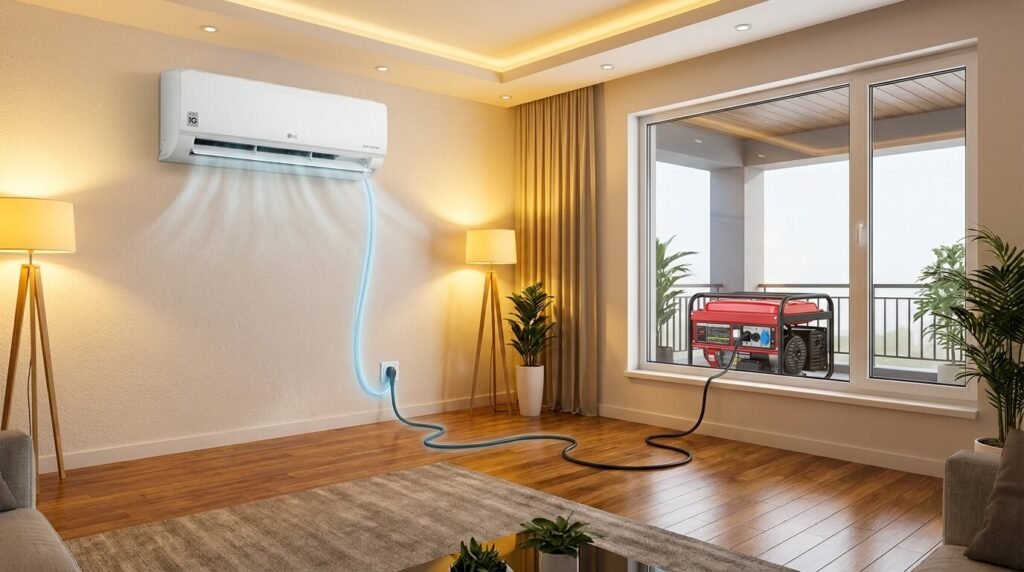
Yes, But Under Specific Conditions.
Inverter ACs can absolutely run on generator power; millions of Nigerians do it every day.
But generator compatibility depends on a few key conditions: the generator must be properly sized to handle both the startup surge and the running watts of the AC, and the power output must be stable enough for the sensitive electronics inside the unit.
Get those two things right, and your inverter AC will run without issues on a generator.
Importance of Stable Voltage
The inverter control board — the PCB — inside your AC is the most sensitive component in the system. It reads the incoming voltage and manages the compressor speed accordingly.
When a voltage fluctuation occurs, this board can overheat, malfunction, or fail. Maintaining voltage stability within the 200–240V range — Nigeria’s standard supply — is critical.
An AVR (Automatic Voltage Regulator) helps maintain this stability and protects the control board from the kind of damage that unstable generator output can cause.
Importance of Stable Frequency
Nigeria operates on a 50Hz frequency standard, and your inverter AC’s variable speed compressor is calibrated to work within this range.
When a generator produces electricity with frequency deviations, more common with older or poorly maintained petrol generators, the compressor struggles to maintain the correct speed.
This causes inefficient cooling, higher power draw, and in some cases, long-term mechanical damage. Stable frequency isn’t just a technical detail; it directly affects how long your AC lasts.
Generator Requirements for Running an Inverter AC
Correct Generator Capacity
Matching your generator’s capacity to your AC’s actual load is non-negotiable.
A 1.5HP AC typically requires around 1,200 to 1,500 running watts, but its starting watts can spike significantly higher due to the startup surge during compressor start.
The general rule is to choose a generator with at least 25–30% more capacity than the AC’s running load. Knowing the watts used by an Air conditioner before purchasing a generator is the first and most important step in proper load planning.
Stable Voltage Output
Even if your generator has enough capacity, unstable voltage can still damage your inverter AC. Voltage drops below 180V, and sudden voltage spikes both put the Smart AC PCB at risk.
Look for generators with a built-in AVR that automatically stabilizes voltage output. Brands like Honda Motor Company are known for consistent voltage delivery, which is why they’re a reliable choice when running sensitive inverter electronics.
Always check the generator’s spec sheet for voltage regulation data before buying.
Pure Sine Wave Power Quality
Inverter ACs are built around sensitive electronics that work best with pure sine wave power, the cleanest form of electrical output.
Some budget petrol generators produce modified sine wave electricity, which carries harmonic distortion. High total harmonic distortion (THD) can interfere with the AC’s PCB and compressor operation.
Inverter generators are specifically designed to produce pure sine wave output, making them far more compatible with inverter ACs than conventional petrol generators on the market.
Best Generator Types for Inverter Air Conditioners
Inverter Generators
If the budget allows, inverter generators are the best match for inverter ACs. Brands like Honda Motor Company produce inverter generators that deliver clean, stable, pure sine wave electricity with minimal harmonic distortion.
They’re also more fuel-efficient, which lowers your cost per hour of operation. The stable power quality protects the AC’s electronics, reduces the risk of PCB failure, and ensures the compressor runs exactly as it should.
They’re quieter too, which is a real plus in residential areas.
Petrol Generators
Petrol generators from Firman Power Equipment and similar brands dominate the Nigerian market because they’re affordable and widely accessible.
They can run inverter ACs successfully, but they require extra precautions. Many conventional petrol generators produce modified sine wave output, which introduces harmonic distortion.
Pairing them with a voltage stabilizer from Binatone helps smooth out the supply. For the best Generator brand for 1.5HP AC compatibility, focus on petrol generators with built-in AVR and stable frequency output under load.
Diesel Generators
Diesel generators from Cummins Inc. and other heavy-duty manufacturers are common in offices, commercial spaces, and industrial setups.
They’re built for continuous load, longer runtime, and heavy use. For running multiple AC units or larger 2HP ACs in a commercial space, diesel generators offer better load capacity and more consistent output.
They cost more upfront, but their fuel economy over long operating hours makes them cost-effective for businesses that depend on continuous, reliable cooling throughout the day.
Risks of Running an Inverter AC on a Generator
Voltage Fluctuation Damage
The Smart AC PCB in an inverter air conditioner doesn’t handle unstable power well. When voltage fluctuation occurs, repeatedly dropping low or spiking high, the control board can fail.
Repairing or replacing a PCB is expensive, and in some cases, it means replacing the entire indoor unit.
Power surge protection from brands like APC can help, but the best approach is preventing voltage instability at the source, which starts with selecting a stable, properly sized generator.
Frequency Instability Problems
A generator that doesn’t consistently deliver 50Hz output creates ongoing problems for the variable speed compressor.
The compressor relies on the correct frequency to regulate its speed accurately.
When frequency drifts, the compressor either works too hard or underperforms; both scenarios increase internal wear and reduce cooling efficiency.
Over time, this shortens the compressor’s lifespan considerably.
Regular generator maintenance helps keep frequency output steady and significantly reduces the risk of long-term compressor damage.
Generator Overload
When a generator is undersized for the appliances connected to it, it gets pushed beyond its load capacity.
This triggers overload protection, the generator shuts down, or worse, it keeps running under strain and damages both itself and the connected appliances.
Circuit breakers from brands like Schneider Electric can help prevent total failure, but the real solution is proper generator sizing from the start, rather than relying on protection devices after overload problems have already begun.
How to Safely Run an Inverter AC on a Generator
Use a Voltage Stabilizer
A voltage stabilizer functioning like an external AVR is one of the simplest ways to protect your inverter AC from generator power fluctuations.
Brands like Binatone offer affordable stabilizers designed for home use. The stabilizer sits between the generator and the AC, absorbing voltage swings and delivering a consistent supply to the unit.
It won’t fix every power quality issue, but it significantly reduces the risk of PCB damage caused by voltage fluctuation from an unstable generator.
Choose the Right Generator Size
This is the most important decision you’ll make. Use the generator sizing formula: take the AC’s running watts, add the startup surge, then apply a 25–30% safety margin on top of that total.
That’s the minimum generator capacity you need. For a 1.5HP Hisense inverter AC, this typically works out to a generator in the 2.5kVA to 3.5kVA range, depending on what other appliances you need to run at the same time during a power outage.
Reduce Additional Load on the Generator
When running an inverter AC on a generator, avoid the temptation to run every other appliance simultaneously.
The AC alone, especially during startup, draws a significant peak load. Adding a fridge, television, and other devices on top of that pushes the generator toward overload.
If you must run other appliances, calculate the total continuous load carefully and make sure it stays well within the generator’s rated capacity, with a safe margin remaining to absorb any startup surge.
Service the Generator Regularly
A poorly maintained generator produces unstable electricity. Dirty spark plugs, old oil, and worn components all degrade output quality, affecting voltage, frequency, and overall power quality.
Regular generator maintenance for Honda Motor Company and Firman Power Equipment units keeps them performing within specification.
A generator neglected for months is far more likely to damage your inverter AC than one that’s routinely serviced. Think of generator maintenance as an essential part of protecting your entire cooling system.
Inverter AC vs Non-Inverter AC on Generator Power
Startup Power Comparison
Non-inverter ACs use fixed-speed compressors that require a high startup surge every time they kick on, which is frequent because they run in a constant on/off cycle.
Inverter ACs, with their soft start technology, reduce the current spike at startup significantly. This makes them easier on the generator, especially during that critical moment when the compressor first draws power.
Lower startup surge means less stress on the generator and a reduced risk of overload trips during startup.
Fuel Consumption Comparison
Because an inverter AC’s variable speed compressor doesn’t run at full power constantly, it draws less electricity during steady operation.
Less electricity drawn from the generator means the engine doesn’t have to work as hard, which directly reduces fuel consumption.
Over several hours of operation, this difference adds up noticeably. For Nigerians running generators daily, the fuel savings from pairing a generator with an inverter AC rather than a conventional non-inverter unit are worth factoring into your energy budget.
Long-Term Generator Performance
The constant high-load cycling of a non-inverter AC places more mechanical wear on a generator over time.
The inverter AC’s steady, lower continuous load is gentler; the generator doesn’t have to work as hard or as erratically throughout its runtime.
This extends generator reliability and lowers maintenance costs in the long run. For Nigerian homes and offices running generators six to twelve hours daily, this difference in long-term generator performance is a serious consideration worth planning around.
Common Mistakes Nigerians Make
Using Undersized Generators
This is the most common and most damaging mistake. Many people buy a generator based on the kVA label without checking whether it can handle both the running watts and starting watts of their air conditioner.
A 1.5HP AC has a startup surge that can temporarily double its power demand.
An undersized generator trips, shuts down, or struggles repeatedly, and that repeated strain shortens the lifespan of both the generator and the AC unit over time.
Ignoring Voltage Protection
Skipping a voltage stabilizer might seem like a cost-saving decision, but it rarely ends well. Inverter ACs have sensitive PCBs that don’t tolerate voltage fluctuation.
One bad spike or sustained low-voltage operation can damage the control board beyond repair. Replacing an inverter AC PCB often costs tens of thousands of naira.
The one-time cost of a quality stabilizer from Binatone or an APC surge protection device is a small fraction of that repair bill, and the peace of mind is worth it.
Running Too Many Appliances Together
When the generator comes on, the temptation is to run everything at once: the AC, fridge, TV, and microwave together.
But each appliance adds to the generator’s continuous load, and if the total peak load exceeds the generator’s capacity during startup, overload protection kicks in, and everything shuts down.
Plan your generator load carefully. The surge current from an AC compressor at startup is already significant, and adding other appliances on top makes overload a near-certainty with undersized generators.
Best Practices for Nigerian Homes and Offices
For Homes
For a typical Nigerian home running a single 1.5HP inverter AC, a 2.5kVA to 3.5kVA generator with stable voltage output and a built-in AVR is a solid setup.
Add an external voltage stabilizer if the generator doesn’t have a built-in regulator. When shopping, choose the Best Inverter AC for Generator use.
Look for models with soft start technology and low starting watts. It makes home backup planning simpler and keeps fuel consumption manageable over long daily generator hours.
For Offices
Offices typically run AC units for eight or more continuous hours daily, meaning the generator has to handle a steady, reliable, continuous load without interruption.
For offices with two or three 1.5HP or 2HP AC units, a diesel generator from Cummins Inc. in the 7.5kVA to 10kVA range is often more appropriate than a petrol unit.
Proper office backup planning also means factoring in computers, lights, printers, and other equipment into the total load calculation before selecting generator size.
For Commercial Spaces
Commercial spaces, such as shops, restaurants, and salons, often run multiple AC units alongside other high-load appliances simultaneously.
Generator oversizing is a smart practice here; having more capacity than the minimum load ensures the generator never operates near its limit.
A Mikano International silent generator or a heavy-duty Cummins diesel unit with proper grounding and circuit breakers from Schneider Electric gives commercial operators the backup power reliability they need to stay fully operational during Nigeria’s frequent power outages.
CONCLUSION
Inverter ACs and generators can absolutely work together in Nigeria, but compatibility isn’t automatic.
It depends on getting the generator size right, ensuring stable voltage and consistent 50Hz frequency output, and protecting sensitive electronics from power fluctuations.
Inverter ACs are actually more generator-friendly than regular units thanks to soft start technology and lower continuous power draw, but they’re also more vulnerable to poor power quality.
Choose the right generator, use an AVR or voltage stabilizer, reduce unnecessary load, and service your equipment regularly.
Do those things, and your inverter AC will run reliably on generator power for years to come.
[…] buying, confirm that the AC can run on your generator’s output capacity. Inverter ACs generally pair better with an inverter generator from a brand like Honda Motor […]