
You’ve searched online, visited three shops, and gotten four different prices for the same AC brand, and you still don’t know who to trust.
Every dealer has a “best price,” every market has a different figure, and the more you ask around, the more confused you become. Buying an air conditioner in Nigeria shouldn’t feel like a guessing game, yet here you are.
Chasing the lowest price isn’t the answer; knowing the fair market price before you walk into any shop is.
This post breaks down current air conditioner prices in Nigeria across the most popular brands, capacities, and types, so you walk in informed, not manipulated.
Here’s the real problem: most Nigerians don’t overpay because they’re careless; they overpay because nobody gave them the numbers before the negotiation started.
Factors That Affect Air Conditioner Prices in Nigeria
Before jumping straight to numbers, it helps to understand why two air conditioners can have completely different price tags. Several things drive AC pricing in Nigeria, and knowing them upfront saves you from making costly mistakes.
Air Conditioner Type
The type of AC you choose is one of the biggest price determinants. Split ACs, which separate the indoor and outdoor units, are the most popular for residential use and sit at mid-range prices.
Window ACs are more compact and generally cheaper, fitting directly into window openings.
Portable ACs offer flexibility since they move easily from room to room, though they often cost more per cooling capacity.
Floor-standing ACs, sometimes called Standing ACs, are designed to cool large commercial spaces and come with a significantly higher price tag.
Inverter vs Non-Inverter Technology
Inverter ACs use a variable-speed compressor that adjusts cooling output based on room temperature. This makes them far more energy-efficient than conventional Non-Inverter ACs, which cycle the compressor on and off at a fixed speed.
Inverter models like those from Samsung Electronics and LG Electronics cost more upfront. But they reduce power consumption significantly over time, which matters a lot given Nigeria’s high electricity tariffs.
Horsepower (HP) Capacity
HP defines the cooling strength of an AC. A 1HP unit is great for small bedrooms, a 1.5HP handles medium-sized rooms well, and a 2HP or higher is suited for larger spaces.
Simply put, the higher the horsepower, the higher the price. Oversizing your AC for a room wastes money on both the purchase and your electricity bill.
Brand Reputation
Brand matters more than people think. Premium brands like Daikin Industries, Panasonic, Hisense, Samsung Electronics, and LG Electronics carry higher retail prices because of their advanced technology, better warranty support, and proven durability.
Budget-friendly brands like Hisense offer decent cooling at a lower price point, making them popular for cost-conscious buyers.
The choice between premium and budget ultimately comes down to how long you plan to use the unit and how much reliability matters to you.
Imported Components and Exchange Rates
Nearly all air conditioners sold in Nigeria are imported, mostly from China. This means the Nigerian Naira exchange rate directly affects pricing.
When the naira depreciates against the dollar, import duty goes up and so does the retail price. Inflation compounds this effect, which is why AC prices can shift significantly from one month to the next.
Price Range of Different Types of Air Conditioners
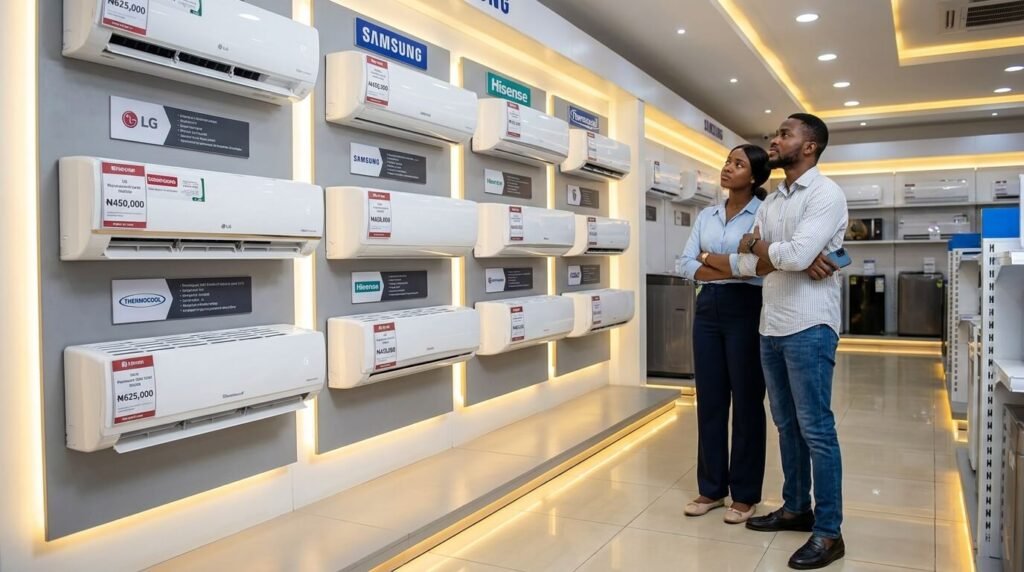
Here’s a practical breakdown of what you’re likely to pay for different AC types in Nigeria today. These ranges reflect current market prices from authorized dealers and online marketplaces like Jumia Nigeria.
Split Air Conditioner Prices
Split ACs are the most common residential cooling choice in Nigeria. A basic 1HP split AC starts from around ₦300,000, while a 1.5HP unit typically ranges from ₦350,000 to ₦500,000.
Higher-capacity models from premium brands can go well above ₦600,000. Brands like LG Electronics and Hisense dominate this category.
Royal air conditioner price starts around ₦300,000 for the 1.5HP, while the Inverter Split AC is from ₦450,000 – ₦650,000.
Inverter Air Conditioner Prices
Inverter ACs come at a higher upfront cost for energy savings. A 1HP inverter split AC starts around ₦350,000, while a 1.5HP inverter unit runs between ₦450,000 and ₦700,000, depending on brand.
Samsung Electronics and Daikin Industries models with dual inverter compressors sit at the premium end of this range.
Window Air Conditioner Prices
Window ACs are compact and wallet-friendly. A standard 1HP window unit can go for as low as ₦150,000 to ₦250,000.
Brands like Midea Group offer reliable window AC options at competitive price points. They’re best for single rooms where installation simplicity matters.
Portable Air Conditioner Prices
Portable ACs are flexible but often more expensive per cooling capacity. Expect to pay between ₦200,000 and ₦450,000 or even more for a decent unit.
They don’t require permanent installation, which is great for renters, but their cooling efficiency is generally lower than split or window types.
Floor-Standing AC Prices
Standing ACs cater to large commercial spaces like offices, event halls, and churches. These units from brands like Panasonic Holdings start from around ₦850,000 and can exceed ₦2,000,000 ( depending on where it is sold) for high-capacity models.
Their job is to cool large spaces efficiently, and the price reflects that heavy-duty requirement.
Air Conditioner Prices by Horsepower
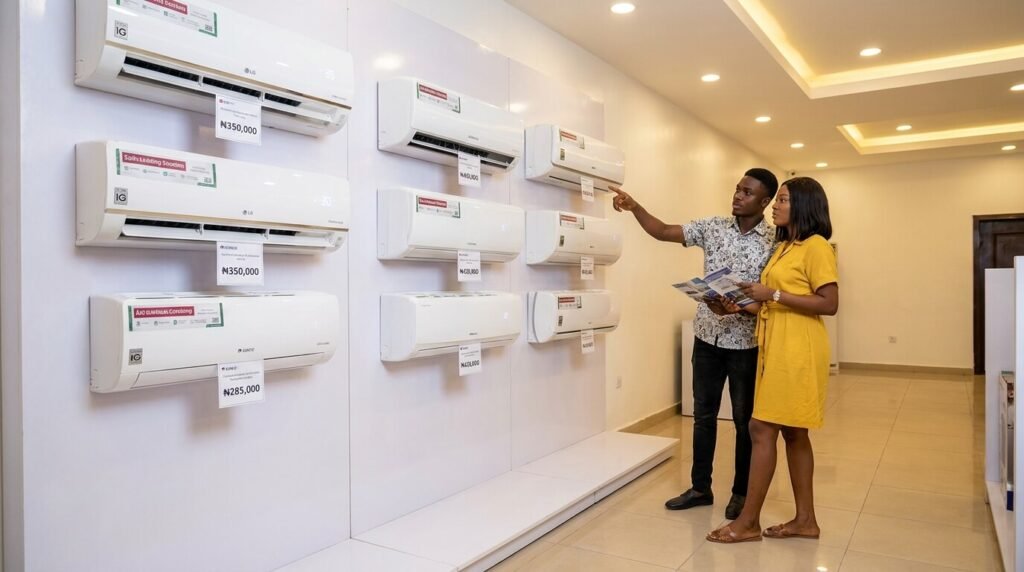
Horsepower is often the first filter buyers use when shopping. Here’s what each capacity level typically costs in the Nigerian market.
1HP Air Conditioner Prices
A 1HP AC is suitable for small rooms, think bedrooms of about 12 to 15 square metres.
Prices start from around ₦1800,000 for basic window models (it seems it has been phased out) and go up to ₦450,000 for inverter split units from brands like LG Electronics. It’s the most affordable entry point into air conditioning.
1.5HP Air Conditioner Prices
The 1.5HP AC is by far the most popular size in Nigerian homes. It balances cooling and power well for medium-sized bedrooms and living rooms.
Price ranges typically fall between ₦300,000 and ₦650,000, depending on inverter capability and brand. Pansonic, Midea, Skyrun, Hisense, and LG Electronics are particularly strong in this category.
2HP Air Conditioner Prices
A 2HP unit handles larger spaces like big living rooms or open-plan offices. Samsung Electronics and Daikin Industries offer strong 2HP models ranging from ₦400,000 to ₦600,000.
Inverter versions of 2HP ACs cost more but are well worth it in large spaces where the AC runs for extended hours.
3HP and Above
3HP and above are commercial and industrial cooling systems for banks, supermarkets, and large offices.
These are cassette ACs or ceiling concealed systems from brands like Daikin Industries, and they start from ₦1,200,000 upwards. Installation for these systems is also significantly more complex and expensive.
Inverter AC vs Non-Inverter AC Prices
Why Inverter ACs Cost More
The price difference comes down to advanced compressor technology. Inverter ACs use a variable-speed motor that adjusts its speed based on the cooling load instead of switching fully on and off.
LG Electronics’ Dual Inverter Compressor, for example, improves energy savings substantially and reduces noise during operation. Manufacturing this technology is more expensive, and that cost flows through to the retail price.
Long-Term Electricity Savings
Here’s where inverter ACs win back their premium price. Because they reduce power consumption compared to non-inverter models, they lower your monthly electricity bill.
In a country where running costs are high and grid reliability is poor, this matters. Most buyers recover the price difference within 18 to 24 months of regular use, making the inverter option a smarter long-term investment.
Which Offers Better Value in Nigeria?
If budget is the biggest constraint, a non-inverter AC from Hisense or Midea Group gets the job done at a lower upfront cost. But if you’re planning to run the AC for several hours daily, the inverter version offers better value over its lifespan.
The payback period is real, and so are the electricity savings, especially given Nigeria’s current electricity tariff levels.
Best Air Conditioner Options for Different Budgets
Budget-Friendly AC Options
If you’re working with a tighter budget, brands like Hisense and Midea Group offer solid 1HP and 1.5HP non-inverter split ACs that provide reliable cooling without breaking the bank.
Expect to spend between ₦280,000 and ₦400,000 for a complete unit. These are solid entry-level options for bedrooms and small offices.
Mid-Range AC Choices
In the ₦350,000 to ₦600,000 range, you get access to inverter technology from brands like LG Electronics and Samsung Electronics.
These units balance price and efficiency well; you get better energy savings, quieter operation, and longer durability without going into premium territory. This is the sweet spot for most Nigerian buyers.
Premium Air Conditioners
For buyers who want the best, Daikin Industries and Mitsubishi Electric offer advanced features, top-tier energy efficiency, and exceptional build quality.
Premium ACs in Nigeria start from ₦700,000 and go well above ₦1,500,000 for high-capacity units. These suit upscale residential properties, hotels, and corporate offices where performance and reliability are non-negotiable.
How to Choose the Right AC Based on Budget
Consider Long-Term Electricity Costs
A cheap AC that doubles your electricity bill isn’t actually cheap. Before buying, look at the energy efficiency ratio and compare running cost projections.
Energy-efficient systems save money over time, and in Nigeria’s high-tariff environment, those savings add up faster than most people expect.
Match AC Size to Room Size
Room size determines AC size; it’s that straightforward. A 1HP AC for a 25-square-metre room will struggle and run constantly, inflating your bill. A 2HP unit in a small bedroom wastes energy and money.
Get the right match, and you avoid overspending on both purchase and operation.
Prioritize Cooling Needs
Residential cooling and office cooling have different demands. A home bedroom AC runs mainly at night; an office AC may run eight or more hours straight.
For heavy commercial use, inverter ACs and higher HP units offer better return on investment. Match the AC to the actual usage pattern, not just the room size.
Common Mistakes Nigerians Make When Buying ACs
Buying Based Only on Low Price
It’s tempting to go for the lowest price tag, but cheap units often have poor energy efficiency ratings and higher running costs.
A ₦180,000 AC that consumes 30% more electricity than a ₦280,000 model will cost you more within a year of use. Total cost of ownership matters, not just the retail price.
Ignoring Installation Expenses
Many buyers budget only for the AC unit and are caught off guard by installation costs. Copper piping, brackets, drain pipes, labour, and stabilizers can add ₦50,000 to ₦120,000 on top of the unit price.
Always budget for the full setup cost, not just what you see on the price tag.
Choosing the Wrong Horsepower
Underpowered ACs lead to poor cooling performance and energy waste from constant running. Overpowered ACs waste money upfront and don’t dehumidify properly in smaller spaces.
Take room size, ceiling height, and heat load into account before settling on an HP rating.
Ignoring Power Conditions
Nigeria’s power infrastructure means voltage instability is a real concern for every AC owner. An AC without a voltage stabilizer in an area with a poor power supply is a recipe for compressor damage.
Always factor in low-voltage operation capability and electrical protection when choosing your unit.
Seasonal Price Changes in Nigeria
High Demand During Hot Season
During Nigeria’s dry season, especially in the north, consumer demand for ACs spikes. Heatwave demand from Northern Nigeria can drive retail prices up by 10 to 20% as dealers take advantage of peak buying interest.
If you can, buy during the cooler months to get better deals.
Exchange Rate Fluctuations
Because ACs are mostly imported, exchange rate movements directly affect pricing. When the naira weakens, dealers adjust their prices upward to protect margins.
Periods of relative naira stability tend to bring more predictable pricing another reason to monitor the market before making your purchase.
Promotional and Festive Discounts
Black Friday, Christmas, and end-of-year sales on platforms like Jumia Nigeria often come with genuine discounts on AC units. Authorized dealers also run promotions periodically.
Shopping during these windows can save you ₦30,000 to ₦100,000 on mid-range and premium units.
Tips for Buying an Air Conditioner in Nigeria
Buy From Authorized Dealers
Always purchase from an authorized dealer or a verified retailer to ensure genuine products and valid warranty support. If you’re in Lagos, you’ll find trusted AC dealers at places listed in this guide on where to buy Air Conditioners in Lagos.
Buyers in the south-south can also explore options covered in our guide on Where to buy Air Conditioners in Port Harcourt. And for those in the capital, check out our dedicated resource on Where to buy Air Conditioners in Abuja for verified dealer options.
Check Energy Efficiency Ratings
Look at the EER or SEER rating before buying. Higher ratings mean lower electricity consumption and lower monthly bills.
Energy Star-certified models from LG Electronics, Samsung Electronics, and Daikin Industries are worth the extra upfront spend if you plan to use the AC daily.
Verify Installation Support
Some dealers include installation in the purchase price; others don’t. Always confirm before paying. Professional installation by a qualified HVAC technician ensures the system runs at peak efficiency, avoids refrigerant leaks, and protects your warranty.
Compare Long-Term Value
Don’t just compare sticker prices; compare appliance lifespan, spare parts availability in Nigeria, after-sales support quality, and brand reputation.
A unit with good spare parts availability and a responsive service network is worth more than a slightly cheaper model that leaves you stranded when something goes wrong.
Conclusion
Air conditioner prices in Nigeria vary widely based on type, horsepower, inverter technology, and brand reputation, and there’s no single right answer for every buyer.
What matters most is looking beyond the price tag. Factor in long-term running costs, installation expenses, power conditions, and maintenance before committing.
An energy-efficient AC from a reputable brand like LG Electronics, Samsung Electronics, or Daikin Industries may cost more upfront but delivers better value over time.
Take your time, compare options across different budgets, and make sure the unit you choose fits both your space and your lifestyle. The right AC is an investment worth getting right.